
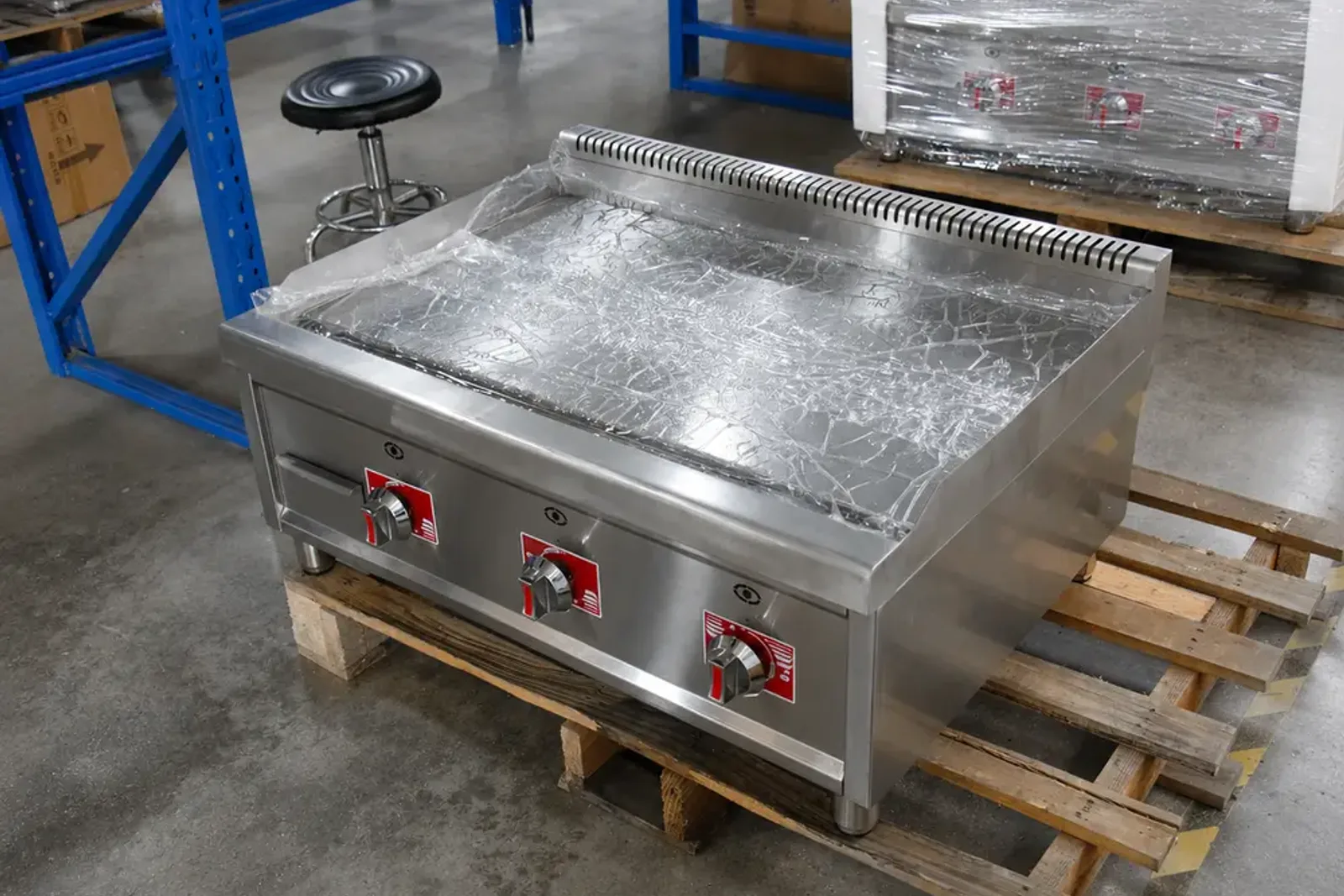
A commercial griddle can handle breakfast service, burgers, meat, seafood, vegetables and many other high-volume menu items. But before choosing a model, buyers must decide whether gas or electric power is the better match for the kitchen.
There is no single answer for every restaurant. The right choice depends on the menu, peak-hour output, available utilities, installation conditions, preferred controls and local operating costs. This guide explains how to compare gas and electric commercial griddles before requesting a quotation.
Gas vs. Electric Commercial Griddle: Quick Answer
A gas commercial griddle can be a practical choice when the site already has a suitable natural-gas or LPG supply and the kitchen team is comfortable working with gas controls. An electric commercial griddle can suit projects with sufficient electrical capacity, especially when thermostatic control and an all-electric cooking line are priorities.
Neither option is automatically better. A buyer should first confirm what the building can support, then match the cooking surface and control system to the menu and service volume.
1. Start with Your Menu and Peak-Hour Output
The first decision should not be gas or electric. Start by listing what the griddle needs to cook and how much food must be produced during the busiest service period.
Consider:
- Main menu items cooked on the griddle
- Portions required during peak service
- Batch size and cooking time
- Whether several temperature zones are needed
- Required smooth, ribbed or combination cooking surface
- Available counter or floor space
A breakfast restaurant may need a broad smooth plate for eggs, pancakes and bacon. A burger restaurant may prioritize fast batch production and easy grease management. A hotel or mixed-menu kitchen may prefer separate cooking zones or a combination plate. These operating details help determine the plate size, number of controls and suitable equipment format.
2. When a Gas Commercial Griddle Makes Sense
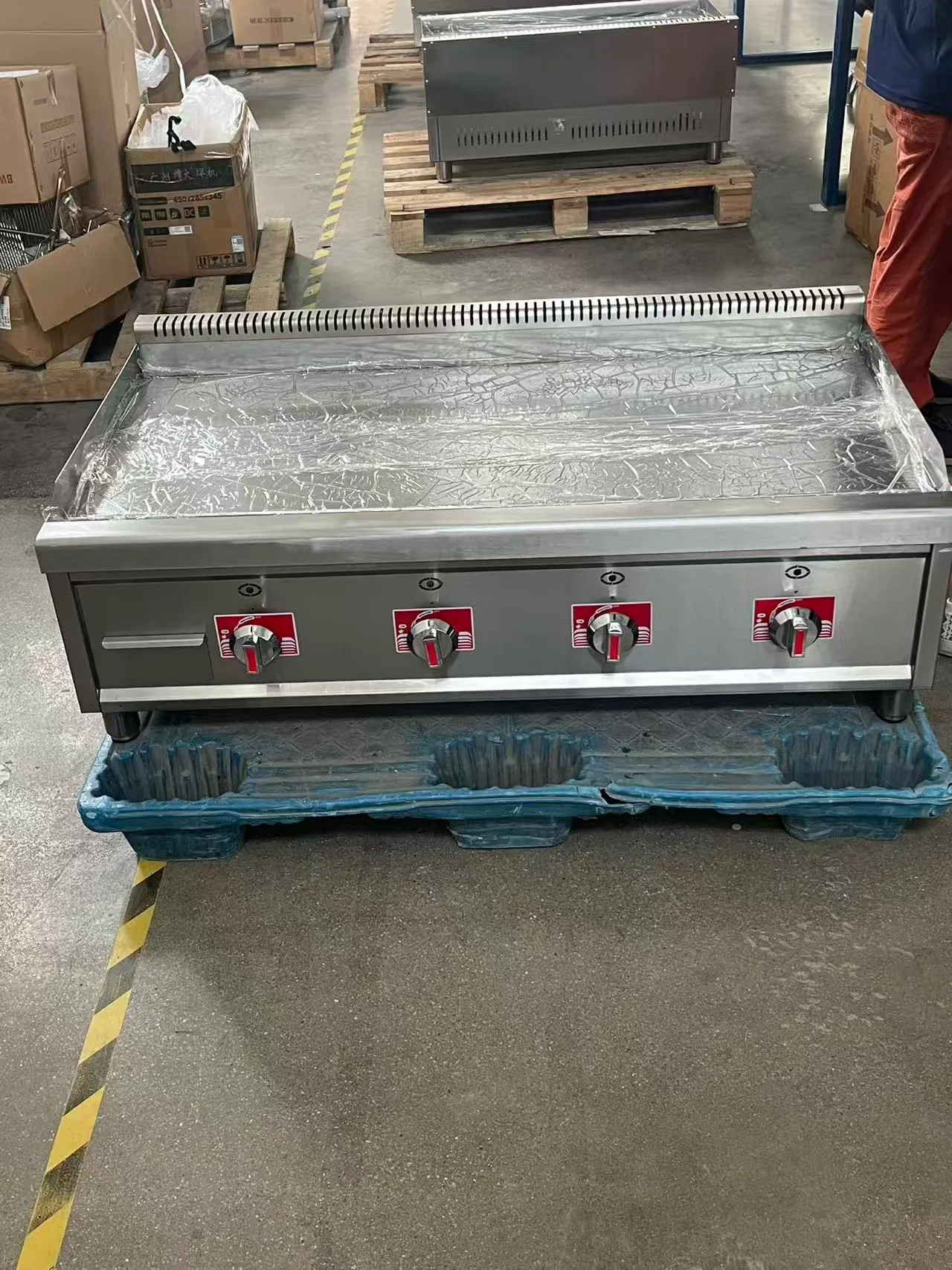
Gas griddles are commonly considered for busy cooking lines where an appropriate gas connection is already available. Independent gas controls can help operators manage different heating zones across a large plate.
A gas model may be suitable when:
- The kitchen already has a confirmed natural-gas or LPG supply
- The cooking line is designed around gas equipment
- The operator wants direct manual control of multiple heating zones
- Local installers can safely connect and commission the equipment
- Ventilation and service clearances are included in the kitchen plan
Before ordering, confirm the gas type, required pressure, connection size and destination-country installation requirements. Never assume that a model prepared for natural gas can be connected to LPG without the correct factory configuration and professional installation.
View the Yaumy Kitchen countertop gas griddle for an example with a broad smooth cooking surface, independent controls and an integrated grease drawer.
3. When an Electric Commercial Griddle Makes Sense
Electric griddles can be a practical option for all-electric kitchens and sites without an approved gas supply. Thermostatic controls can help operators set cooking zones for different menu items, but the electrical system must be checked before purchase.
An electric model may be suitable when:
- The project has sufficient voltage, phase and circuit capacity
- An all-electric cooking line is preferred
- The menu benefits from independently controlled heating zones
- Gas storage or gas piping is not suitable for the site
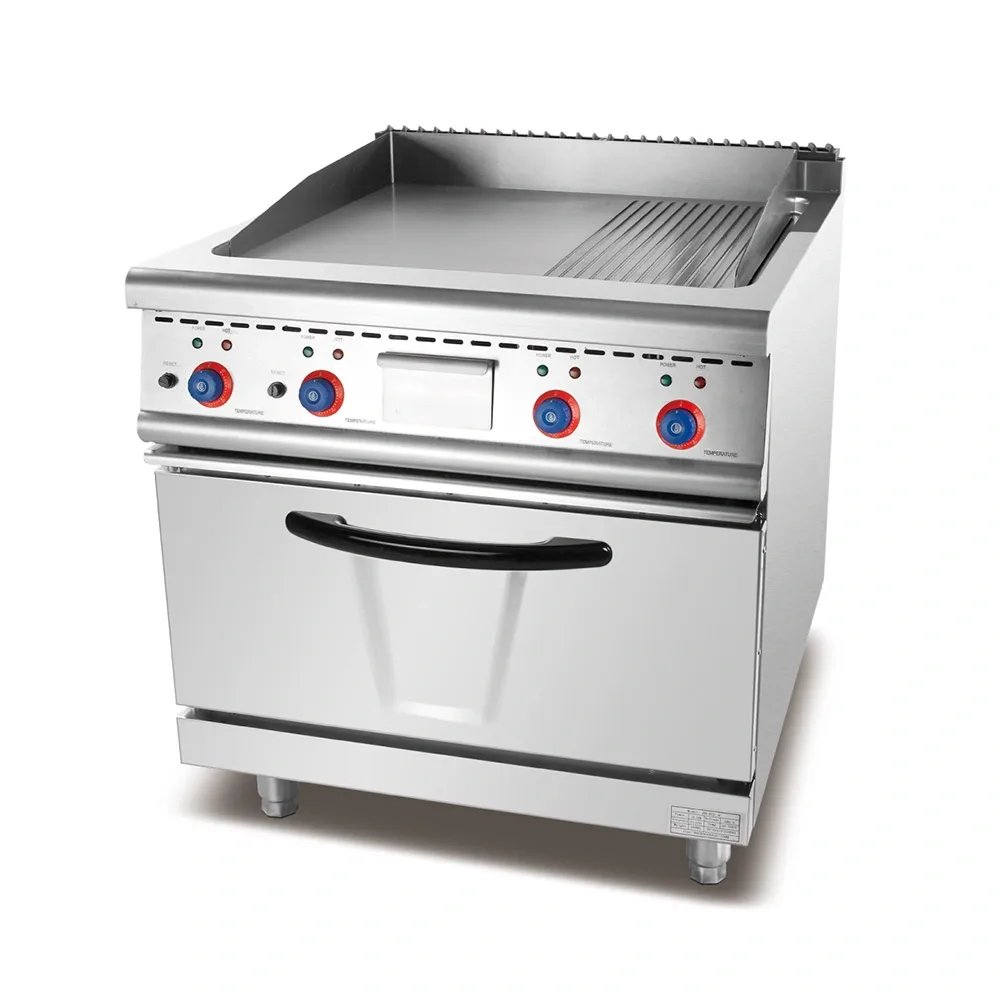
- The buyer wants a griddle-and-oven combination in one footprint
Ask the supplier for rated power, voltage, phase, frequency, cable and connection requirements. A qualified electrician or kitchen consultant should review the final technical sheet before installation.
View the electric griddle with electric oven ZH-TGE-R to see a floor-standing configuration with flat and ribbed cooking zones.
4. Compare Heat Control and Recovery
The actual cooking result depends on more than the energy source. Plate thickness, heating layout, control type, warm-up procedure, thermostat design and production load all affect temperature stability and recovery.
When comparing models, ask:
- How many independently controlled heating zones are provided?
- Is the control manual or thermostatic?
- How is heat distributed below the cooking plate?
- How quickly can the griddle recover between large batches?
- What operating procedure is recommended before peak service?
Avoid choosing a griddle from the fuel type alone. Compare the complete equipment specification and ask the supplier to recommend a configuration based on the food, batch size and service rhythm.
5. Choose the Right Cooking Surface
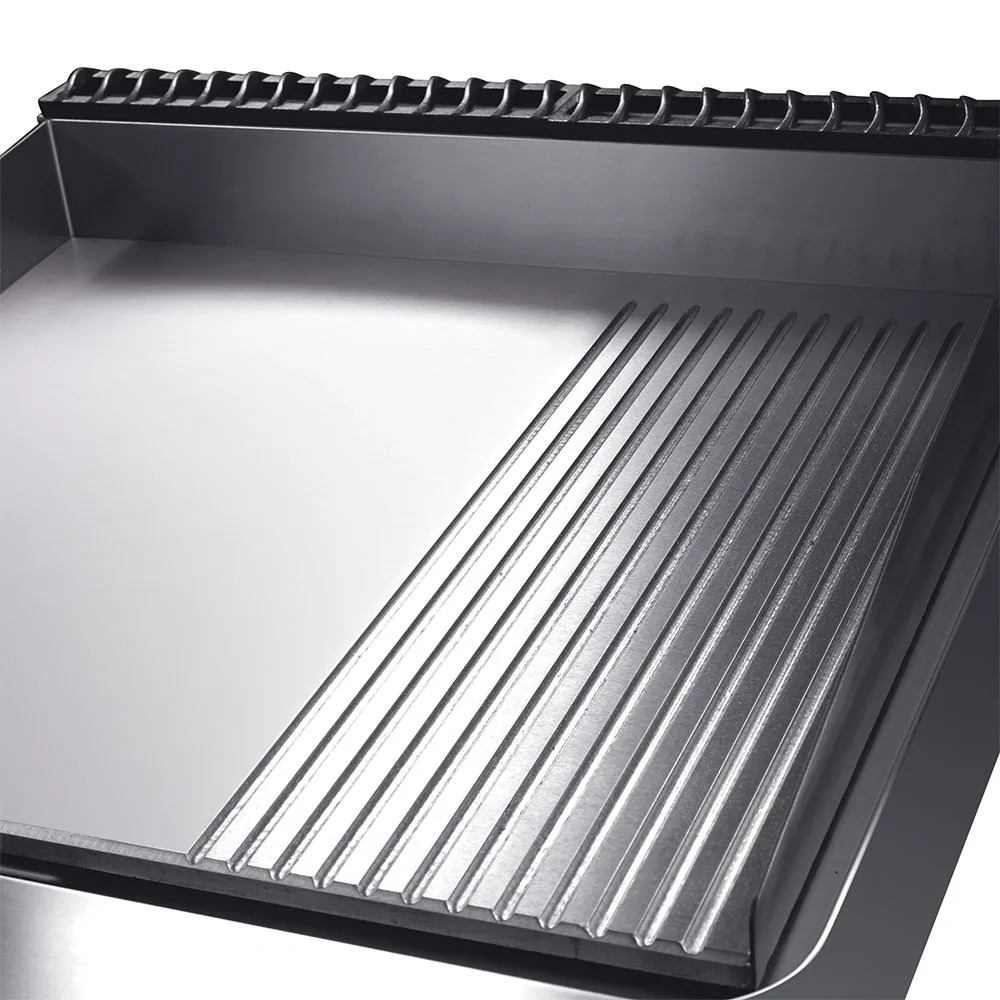
Commercial griddles are available with smooth, ribbed or combination cooking plates.
- Smooth plates support broad contact with food and are useful for eggs, pancakes, burgers, seafood and vegetables.
- Ribbed sections can create grill marks and allow some fat to move away from the food surface.
- Combination plates give one workstation two cooking textures, which can be useful for varied menus.
Usable cooking area matters more than the outside width alone. Confirm the actual plate dimensions, thickness, surface arrangement and number of heating zones. Also check whether the grease channel, splash guard and collection drawer are convenient for daily operation.
6. Check Installation and Utilities Before Quotation
Many ordering problems happen because the equipment is selected before the site utilities are confirmed.
For a gas griddle, prepare:
- Natural gas or LPG requirement
- Available gas pressure and connection information
- Local ventilation and fire-safety requirements
- Installation location and service clearance
For an electric griddle, prepare:
- Voltage, phase and frequency
- Available circuit capacity
- Required plug or hardwired connection
- Installation location and cable route
For either type, measure doors, corridors, elevators and the final cooking-line space. Product dimensions and packaged shipping dimensions should both be reviewed before an export order is confirmed.
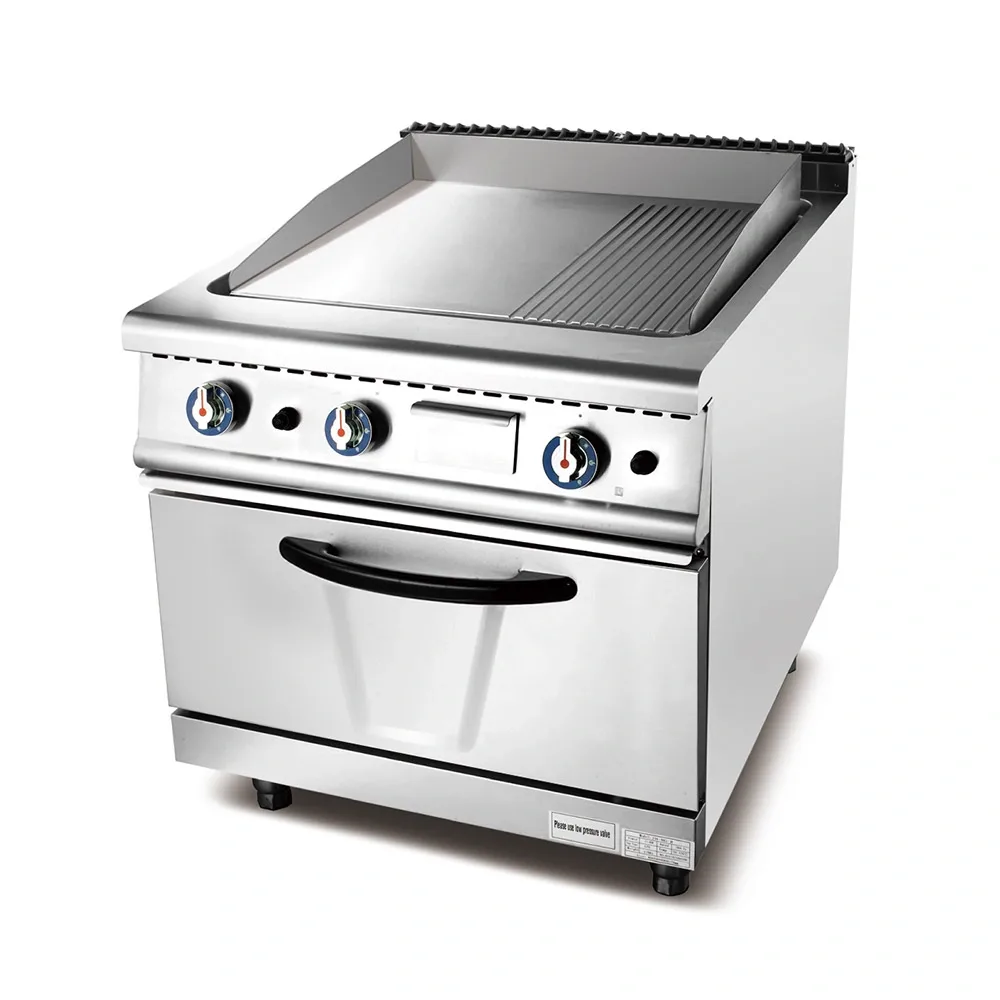
7. Consider Countertop, Cabinet and Oven Combinations
A countertop griddle can preserve floor space and fit an existing equipment stand. A floor-standing model can add a cabinet or integrated oven below the cooking plate. The best format depends on the kitchen layout and whether the lower space is needed for storage or additional cooking capacity.
For compact projects, a griddle with an integrated oven may combine two functions in one footprint. Buyers should still confirm oven type, internal dimensions, door clearance, power or gas configuration and maintenance access.
Compare the gas griddle with oven ZH-RG-R and the electric griddle with oven ZH-TGE-R when planning a combined workstation.
8. Plan for Cleaning and Daily Maintenance
Grease management affects daily labor and equipment condition. Review the grease channel, removable collection drawer, splash guard, plate edges and access around the controls before selecting a model.
Ask the supplier for the recommended plate-cleaning procedure and approved cleaning tools. Operators should follow the equipment manual, allow hot surfaces to cool as instructed and avoid cleaning methods that can damage the plate or control components.
Routine inspection should include control knobs, indicator lights, gas connections or electrical cables, grease collection areas and the condition of the cooking surface. Local qualified technicians should handle gas or electrical service work.
9. Compare Total Project Fit, Not Only Purchase Price
The lowest equipment quotation is not always the lowest-cost project. Installation work, gas or electrical upgrades, ventilation, freight, accessories, cleaning time and service support can all affect the final decision.
Operating cost also depends on local utility prices, operating hours, preheating practices and production load. Instead of assuming that gas or electric will always cost less, compare the conditions at the actual installation site.
For distributors and project contractors, also confirm packing dimensions, production lead time, spare-parts support, branding requirements and the documentation supplied with the equipment.
Commercial Griddle Buyer's Checklist
Prepare this information before requesting a quotation:
- Gas or electric preference
- Natural gas or LPG type, if applicable
- Voltage, phase and frequency, if applicable
- Main menu items
- Peak-hour portions or batch size
- Required smooth, ribbed or combination plate
- Countertop, cabinet or oven-base configuration
- Available installation dimensions
- Destination country and required quantity
- OEM, branding or packaging requirements
Complete project information helps the manufacturer recommend a suitable configuration and prepare a more accurate quotation.
Frequently Asked Questions
Is a gas griddle better than an electric griddle?
Not for every kitchen. Gas can suit sites with an appropriate gas supply and a gas-based cooking line. Electric can suit all-electric projects with sufficient electrical capacity. The menu, control system, installation and local utility conditions should decide the final choice.
Which commercial griddle is easier to install?
It depends on the building. A gas unit requires the correct fuel configuration, ventilation and qualified gas installation. A commercial electric unit may require a high-capacity circuit, correct voltage and professional electrical connection.
Should a restaurant choose a smooth or ribbed griddle plate?
Choose according to the menu. Smooth surfaces suit broad-contact cooking, ribbed surfaces create grill marks, and combination plates support a mixed menu from one workstation.
What information is needed for a commercial griddle quotation?
Send the required energy source, menu, plate type, dimensions, voltage or gas type, quantity and destination country. Photos or drawings of the planned cooking line can also help with model selection.
Choose the Griddle That Fits the Kitchen
The best commercial griddle is the model that fits the menu, peak-hour production, available utilities and installation space. Compare the complete configuration instead of choosing from purchase price or energy source alone.
Yaumy Kitchen supplies gas and electric commercial griddles for restaurants, hotels, distributors and foodservice projects. Browse the electric griddle configuration, review the countertop gas model or request specifications and a quotation.
