
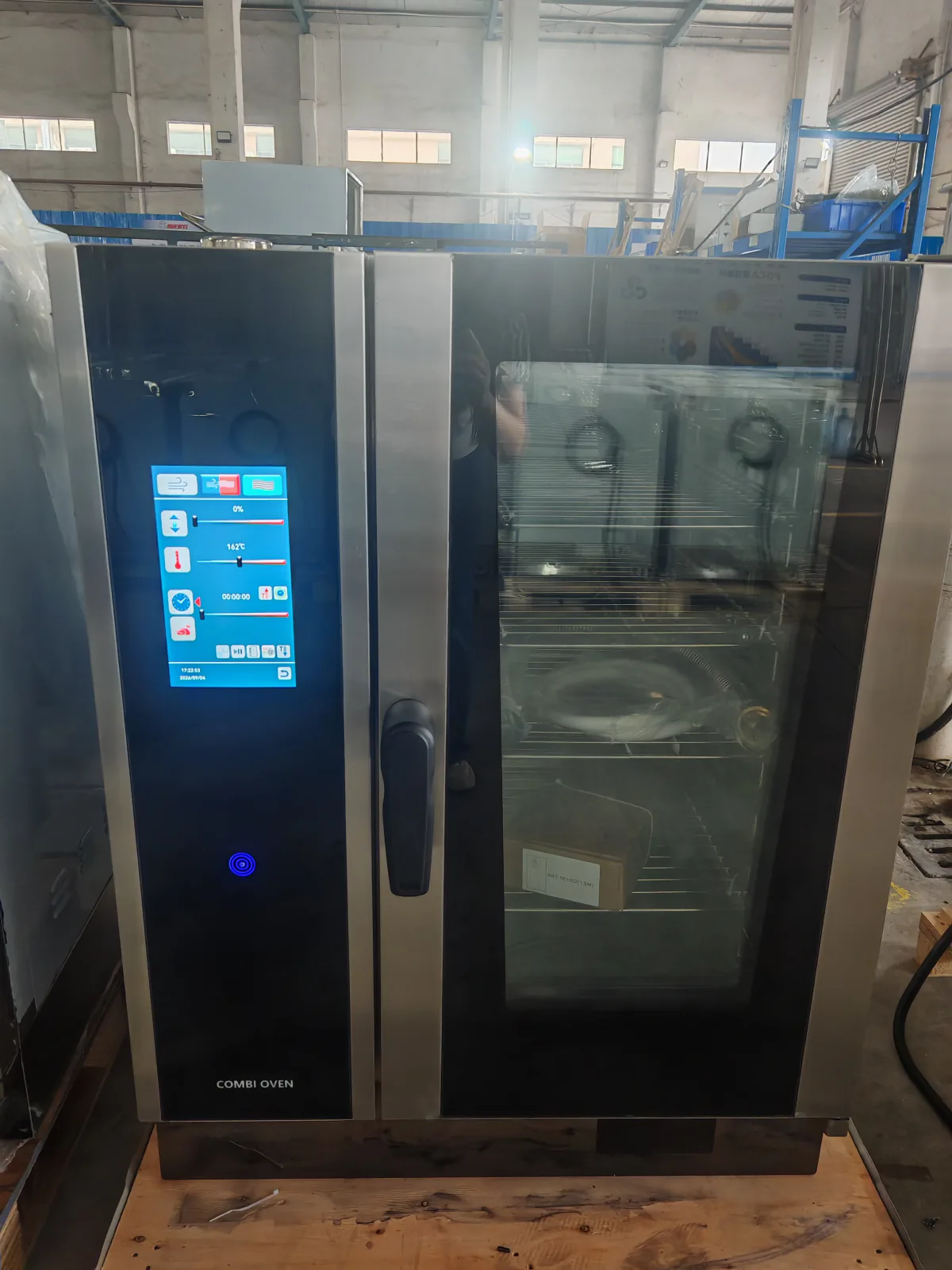
Choosing a commercial combi oven based only on tray capacity or price can lead to insufficient cooking output, electrical installation problems and unexpected operating costs.
Restaurant owners, hotel kitchen planners, distributors and catering-project contractors should evaluate the complete equipment configuration before requesting a quotation. This guide explains seven important factors to check, including capacity, tray format, electrical supply, water requirements, dimensions and after-sales support.
What Is a Commercial Combi Oven?
A commercial combi oven combines convection heat and steam cooking in one machine. Depending on the selected cooking mode and equipment configuration, it can be used for roasting, baking, steaming, reheating and preparing different foods in a professional kitchen.
Compared with purchasing several separate appliances, a combi oven can help kitchens use their available space more efficiently and handle a wider range of menu requirements. However, the right model still depends on production volume, menu, available utilities and installation conditions.
1. Do Not Choose Capacity by Tray Count Alone
The first specification buyers usually notice is the number of trays. Common configurations include 6-tray, 10-tray and 20-tray combi ovens, but tray count does not tell the complete story.
Before choosing a capacity, consider:
- How many meals are produced during the busiest service period?
- What types of food will be cooked?
- How many batches are required each day?
- Will the oven be used mainly for baking, roasting, steaming or reheating?
- Does the kitchen need space for future production growth?
A 10-tray commercial combi oven may suit many restaurants, hotels, cafés, bakeries and institutional kitchens. Larger central kitchens or catering operations may require a higher-capacity solution. Give your supplier the expected daily production and peak-hour output, not only a preferred tray quantity.
2. Confirm the Tray Size and Format
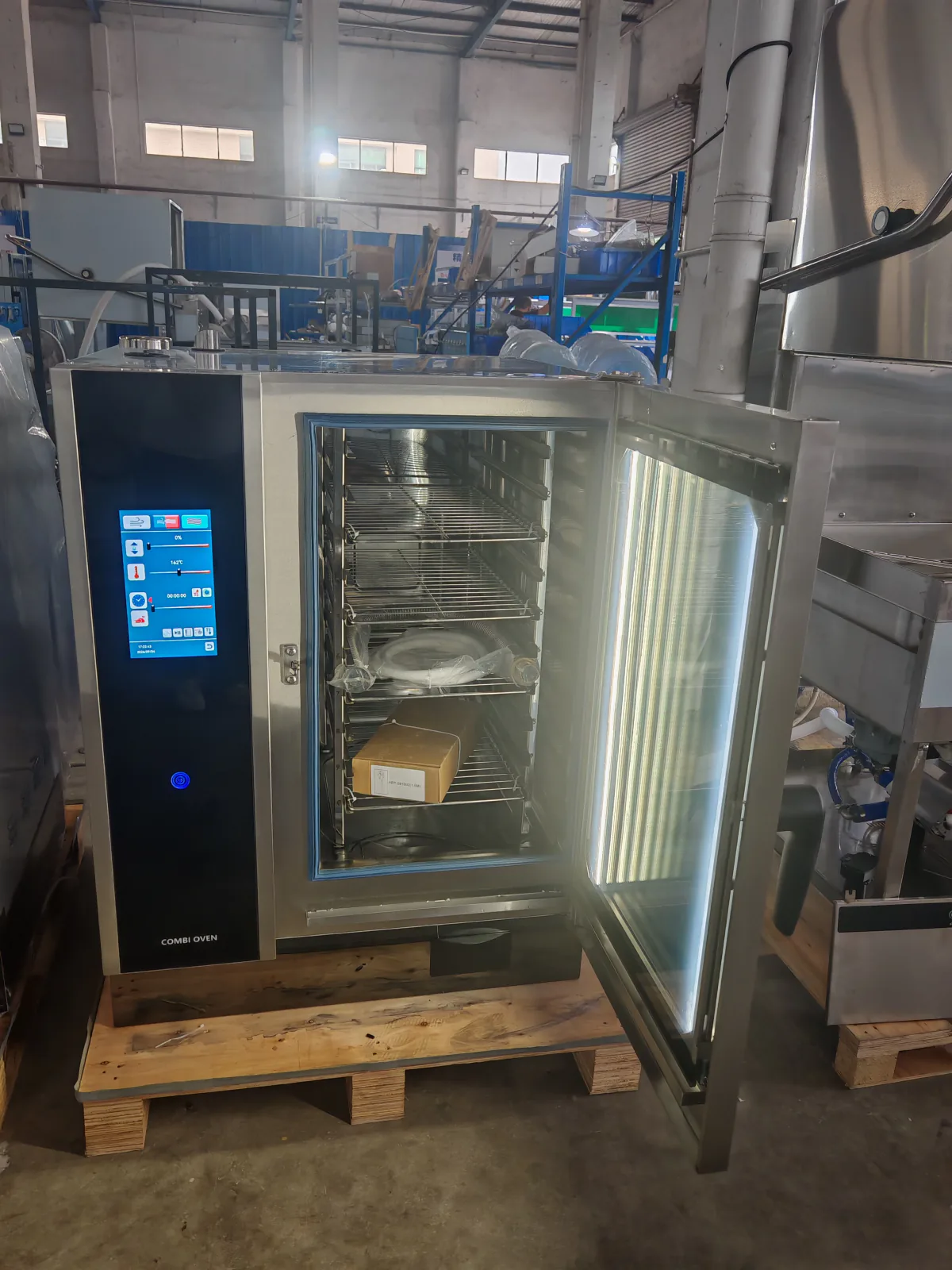
Two ovens described as “10-tray” may not accept the same trays. Always confirm tray dimensions, GN format, distance between levels, maximum usable tray depth and compatibility with existing containers.
A GN 1/1 combi oven is widely used in professional kitchens because GN containers can move conveniently between preparation, cooking, storage and serving areas. The Yaumy Kitchen BW-E-T101 has a stated capacity of 10 × 1/1 GN.
3. Match the Oven to Your Menu
A hotel breakfast kitchen, bakery, seafood restaurant and institutional canteen may require different cooking processes. Prepare a list of the foods the kitchen needs to bake, roast, steam or reheat, then ask the manufacturer to confirm which cooking modes and control functions are included.
Do not assume that every commercial combi oven includes the same programs, probes, cleaning functions or accessories. These details should appear in the final technical specification.
4. Check Voltage, Phase and Rated Power
Electrical compatibility is one of the most important purchasing considerations. Before ordering, confirm local voltage, phase, frequency, rated power, cable requirements, circuit-breaker capacity and whether installation is hardwired.
The BW-E-T101 configuration is specified for 380–400 V / 3N / 50 Hz with a rated power of 18.6 kW. Buyers should confirm the electrical standard required in the destination country, and a qualified electrician or kitchen consultant should review the final technical sheet before installation.
5. Confirm Water, Drainage and Site Conditions
Steam cooking requires more than an electrical connection. Installation may require a stable water supply, suitable inlet connection, drainage, water filtration or softening and access for maintenance.
The stated water-supply pressure for the BW-E-T101 is 100–1900 kPa. Actual site conditions should be checked before installation. Hard water can also cause mineral deposits, so buyers in hard-water areas should discuss suitable treatment with their supplier and installer.
6. Measure the Kitchen Before Ordering
Product dimensions are different from packaged shipping dimensions. The oven must fit through the building entrance, corridors, elevators and kitchen doorways before reaching its final position.
The BW-E-T101 has stated overall dimensions of 880 × 850 × 1150 mm, packaged dimensions of 890 × 890 × 1285 mm and a net/gross weight of 150/195 kg. In addition to equipment dimensions, allow suitable space for connections, door opening, cleaning and service access.
7. Evaluate Cleaning, Spare Parts and After-Sales Support
Purchase price is only one part of the total equipment cost. Ask what cleaning procedures are required, which parts need regular inspection, whether operating instructions are provided, how replacement parts are supplied and what remote technical guidance is available.
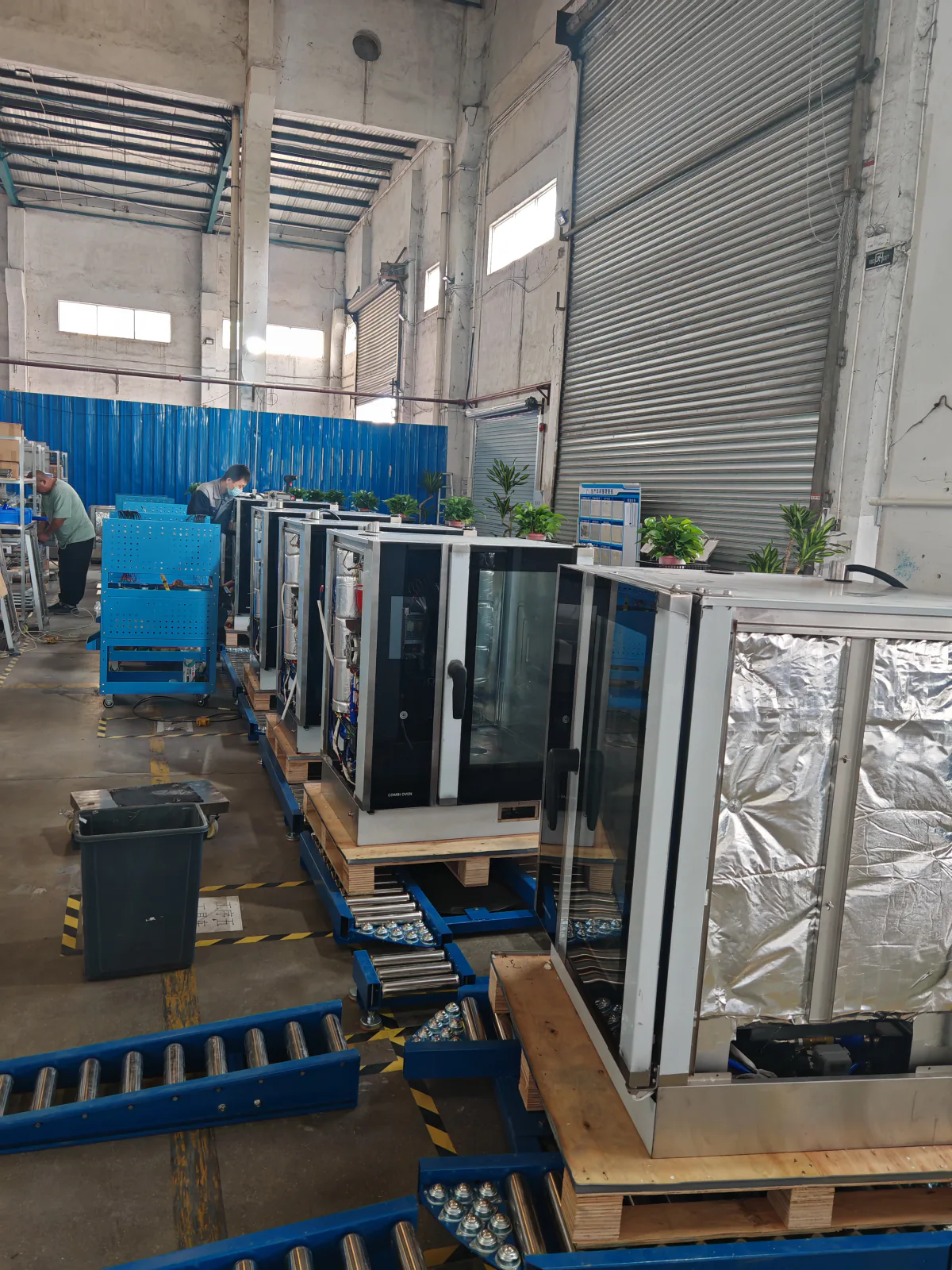
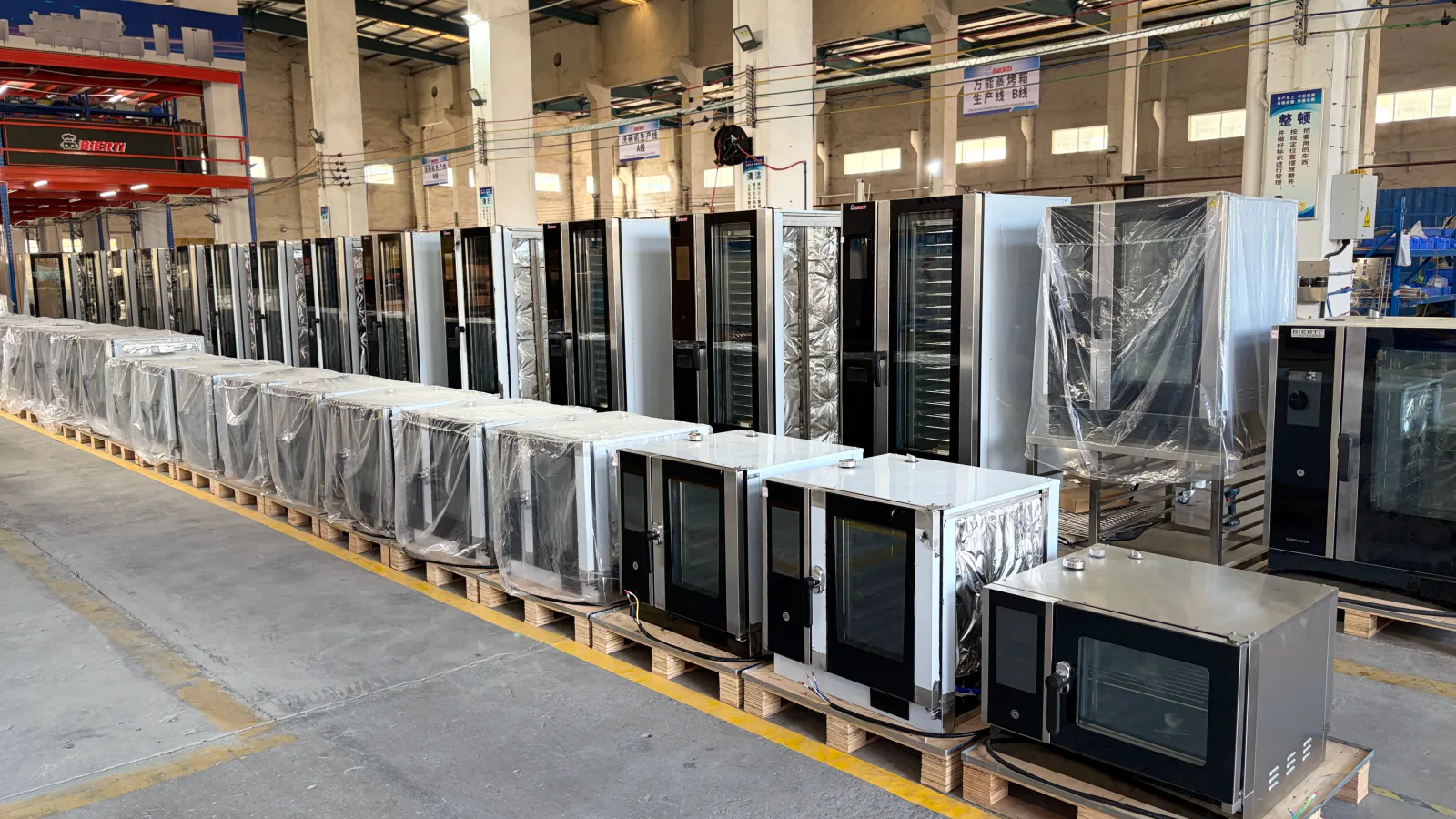
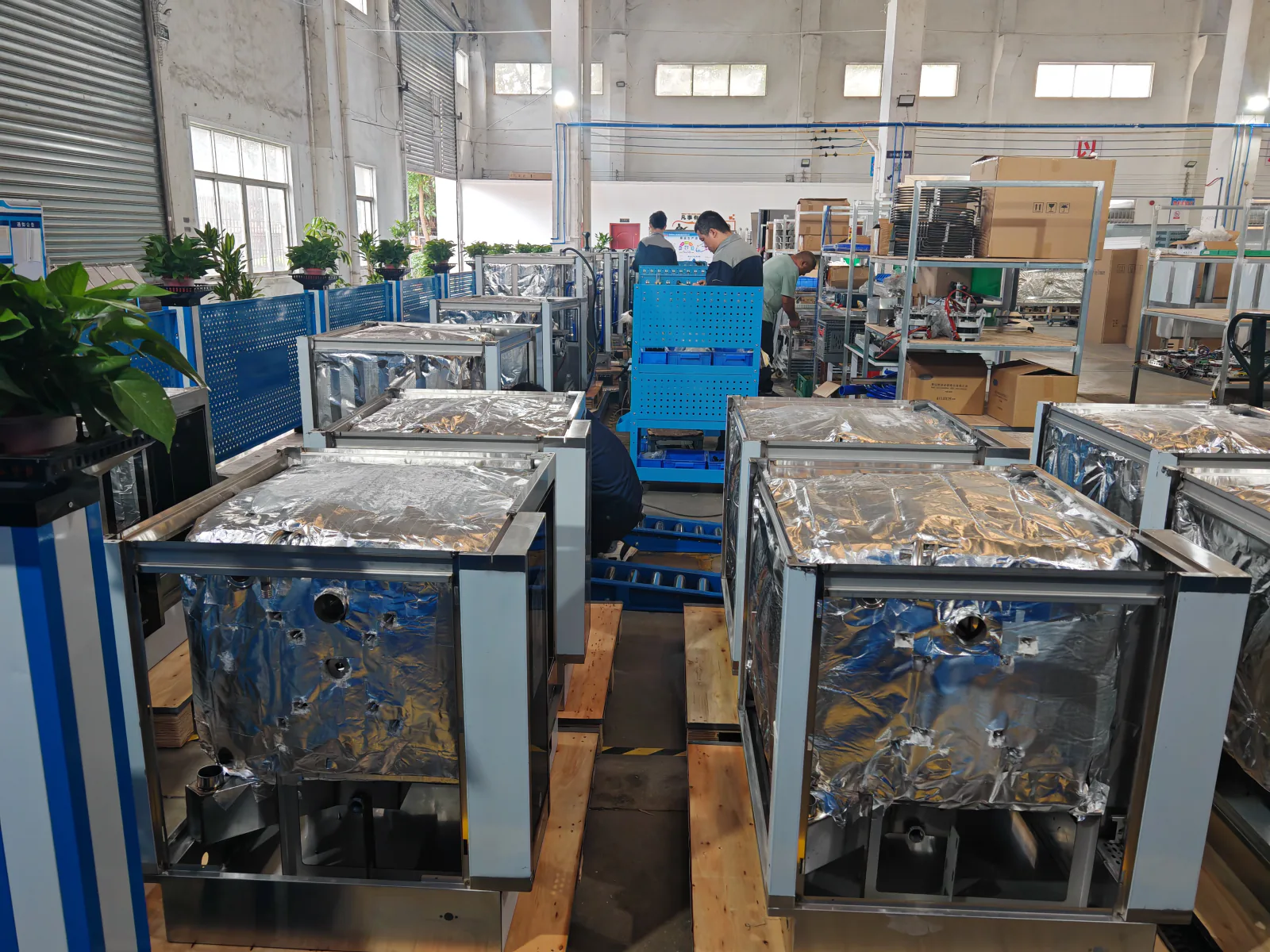
A reliable commercial combi oven manufacturer should provide clear specifications, real product photographs and practical support, not only a low quotation. Factory and production photographs also help buyers verify manufacturing, assembly, testing and export packaging capability.
Commercial Combi Oven Buyer's Checklist
Prepare this information before requesting a quotation:
- Required tray quantity and GN format
- Expected daily and peak-hour output
- Main foods and cooking methods
- Required voltage, phase and frequency
- Destination country
- Available water pressure
- Installation-space dimensions
- Required accessories and purchase quantity
Complete information helps the manufacturer recommend a suitable configuration and prepare a more accurate quotation.
Frequently Asked Questions
What size combi oven does a restaurant need?
The correct size depends on peak production, menu and batch frequency. A 10-tray model can suit many medium-sized kitchens, but capacity should be calculated from actual production requirements.
Does a commercial combi oven need a water connection?
A combi oven using steam normally requires an appropriate water supply and drainage arrangement. Exact requirements depend on the model and configuration.
What electrical supply does a 10-tray combi oven require?
Requirements vary by model. The BW-E-T101 configuration shown here uses 380–400 V, three-phase with neutral, 50 Hz and has a rated power of 18.6 kW. Always confirm local compatibility.
What information is needed for a quotation?
Send the required capacity, tray format, voltage, destination country, intended menu, quantity and any special configuration requirements.
Choose the Right Oven Before Requesting a Price
The best commercial combi oven is not simply the model with the lowest price or the largest number of trays. It should match the menu, production capacity, electrical system, water conditions, kitchen space and maintenance requirements.
Yaumy Kitchen supplies commercial cooking equipment for restaurants, hotels, cafés, distributors and catering projects. View the BW-E-T101 product details or request technical specifications and a quotation.
